As smartphones evolve from mere tools into personal intelligent companions, OPPO is charting a bold new course with its next-generation AI Operating System (AIOS). Unveiled at the Google Cloud Expert Summit in Beijing, OPPO’s vision leans on two guiding principles: Memory Symbiosis and Privacy Protection, promising a future where devices not only respond, but anticipate and adapt to individual user needs.
“The essence of AI is understanding the user,” explains Haonan Lu, Head of Large Model Algorithms at OPPO. “Together with Google Cloud, we are shaping OPPO AI into a truly personal companion—intuitive, proactive, and deeply aligned with everyday life.”
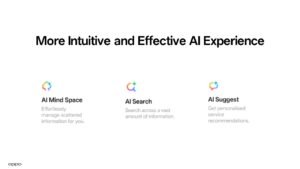
The new AIOS tackles three key challenges many users face: retaining, retrieving, and anticipating information. Enter AI Mind Space, a “second brain” that organizes text, images, and voice interactions, ensuring important information is never lost. Enhanced AI Search makes finding content across apps as natural as a conversation, while AI Suggest leverages real-time context and stored memories to deliver timely, personalized recommendations—all underpinned by robust privacy measures.
Speaking of privacy, OPPO’s Private Computing Cloud (PCC) brings cloud computing power without compromising security, using Google Cloud’s confidential computing capabilities. This ensures that personal data remains private, even as AIOS learns, adapts, and personalizes user experiences.
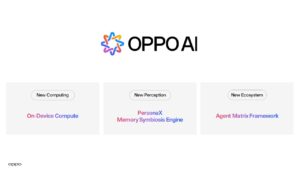
Built on OPPO’s pillars of New Computing, New Perception, and New Ecosystem, AIOS combines on-device compute, the PersonaX memory engine, and the Agent Matrix framework to create a seamless, cross-ecosystem intelligence. By fostering global collaboration and agent interoperability, OPPO is not just reimagining AI on smartphones—it’s crafting a personalized, privacy-centric, and open AI ecosystem for the next generation of connected life.