As Heritage Month highlights culture, history, and shared identity, museums, galleries, and public spaces are reimagining how they present stories to modern audiences. With visitors increasingly consuming information through quick visual interactions, cultural institutions are moving beyond traditional printed panels and static displays toward large-scale visual experiences that make historical narratives more engaging and accessible.
Clear, high-impact visuals help audiences connect more naturally with timelines, artworks, archival materials, and educational content. Projection technology has emerged as a practical solution, allowing institutions to present information at scale, update content easily, and reach larger audiences without overwhelming exhibition spaces.
Built for Large-Scale Visibility
For cultural venues, visibility is essential. Historical photographs, maps, murals, and artworks lose their impact when details become difficult to see, particularly in large spaces or brightly lit environments.
To address this need, Epson Philippines offers high-brightness projection solutions such as the EB-L30000UNL, capable of delivering up to 30,000 lumens. The projector enables large-scale heritage content to remain sharp and visible even under challenging lighting conditions, ensuring that exhibitions maintain their intended impact throughout their run.
Reliability is equally important for museums and cultural institutions that operate long-term or permanent displays. Epson’s laser projectors feature light sources with up to 20,000 hours of maintenance-free operation, helping organizations reduce downtime while managing operational costs efficiently.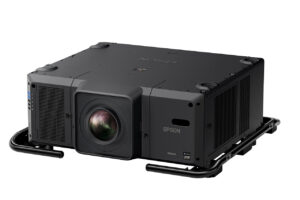
Flexible Solutions for Different Cultural Spaces
Cultural venues vary widely in size and purpose, from permanent museum installations to temporary exhibitions and educational programs. Epson’s L-Series projectors are designed to accommodate these different environments.
Offering brightness levels of up to 8,000 lumens and 4K enhancement technology, the projectors deliver clear, detailed visuals in both controlled and naturally lit spaces. Their flexibility makes them suitable for galleries, classrooms, and multipurpose venues where presentation requirements frequently change.
Features such as short-throw projection allow large images to be displayed even in compact spaces, while wireless connectivity simplifies content updates and day-to-day management. These capabilities provide institutions with greater freedom to adapt exhibits without making structural changes to their environments.
Supporting Long-Term Sustainability
Beyond performance, many cultural institutions are also prioritizing sustainability in their operations. Epson’s laser projection technology is designed for durability and efficiency, reducing maintenance requirements and supporting consistent performance over extended periods.
The company has also implemented broader environmental initiatives across its global operations. These include transitioning to 100% renewable electricity at its sites worldwide and using packaging made from more than 80% recycled cardboard, alongside efforts to improve resource efficiency and reduce material consumption.
“Through efficient, compact, and precise technologies and engineering that solve real-world issues, Epson has always focused on creating new value for the real world,” said Masako Kusama, President and Director of Epson Philippines Corporation. “We continue to build on our legacy by creating solutions that make content clearer and more accessible, while supporting responsible use of resources.”
As cultural institutions continue to evolve, technology plays an increasingly important role in ensuring that heritage remains relevant and engaging. Through reliable, large-scale projection, historical stories can be preserved while becoming more visible, accessible, and meaningful for future generations.
For more information about Epson’s projection solutions, visit Epson Philippines.