The life you’re building with the people you love rests on one non-negotiable: your health. While many plan for careers, milestones, and celebrations, protecting the future often begins with something simpler—showing up for regular screening.
As the Philippines’ first dedicated cancer hospital under Ayala Healthcare Holdings (AC Health), Healthway Cancer Care Hospital (HCCH) is making essential cancer screenings more accessible through preferential rates available until May 14, 2026. The initiative aims to encourage Filipinos to turn awareness into action by making preventive care more within reach.
A structured approach to early detection can help safeguard long-term health. HCCH highlights six essential cancer screenings, each tailored to specific risk factors and life stages.
Breast cancer screening is recommended for women aged 40 and above through routine mammography, with frequency depending on individual risk and physician guidance. Younger women may undergo clinical breast evaluation or ultrasound if necessary, while those with higher risk or family history may require earlier imaging. The screening typically involves a mammogram or ultrasound, and preparation includes avoiding deodorants or lotions on the day of the exam.
Cervical cancer screening is another key preventive measure, beginning around age 30 under clinical guidance. This may involve a Pap smear or HPV-based testing, repeated every few years depending on results and recommendations. Proper preparation includes avoiding vaginal products and scheduling the test outside of menstruation when possible.
Colorectal cancer screening is advised starting at age 45 for most adults, with options such as annual stool-based testing or colonoscopy every ten years, depending on risk factors. The procedure may involve bowel preparation and sedation, requiring patients to arrange transportation afterward.
Lung cancer screening is recommended only for high-risk individuals, particularly adults aged 50 to 80 with a significant smoking history. Annual low-dose CT scans are used to detect early signs, with minimal preparation required.
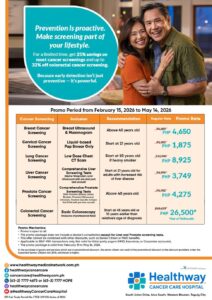
Liver cancer surveillance is also intended for high-risk individuals, such as those with chronic hepatitis or cirrhosis. This typically involves regular ultrasound and blood tests every six months, conducted under physician supervision.
Prostate cancer screening involves a discussion with a healthcare provider starting around age 50, or earlier for high-risk individuals. It may include a PSA blood test, with preparation guidelines such as avoiding strenuous activity before testing.
In certain cases, earlier or more frequent screening may be necessary for individuals with genetic predispositions, strong family histories of cancer, or underlying medical conditions. Screening recommendations are therefore personalized and guided by a patient’s risk profile and medical history.
HCCH emphasizes that effective screening is not just about access, but also clarity and proper guidance. Within an oncology-led environment, specialists help patients understand their results and next steps, ensuring that early detection is matched with informed care.
The opportunity to take control of one’s health is available now, with preferential rates offered until May 14, 2026. Learn more about HCCH’s screening programs or schedule a consultation through Healthway Cancer Care Hospital.